Man Cannot Live on Dorayaki Alone
Hey! Been a minute. I have lots of ideas of things to write, but I haven't gotten around to writing any of it. I've been out in the real world, not the digital one, having adventures, new friends, etc. But I wanted to write something down and I have a free evening.
I wanted to write some thoughts about one of my favorite videos online, a classic of otaku culture: Ron's verson of Fukkireta, uploaded by a certain "tripflag" on June 18th, 2010:
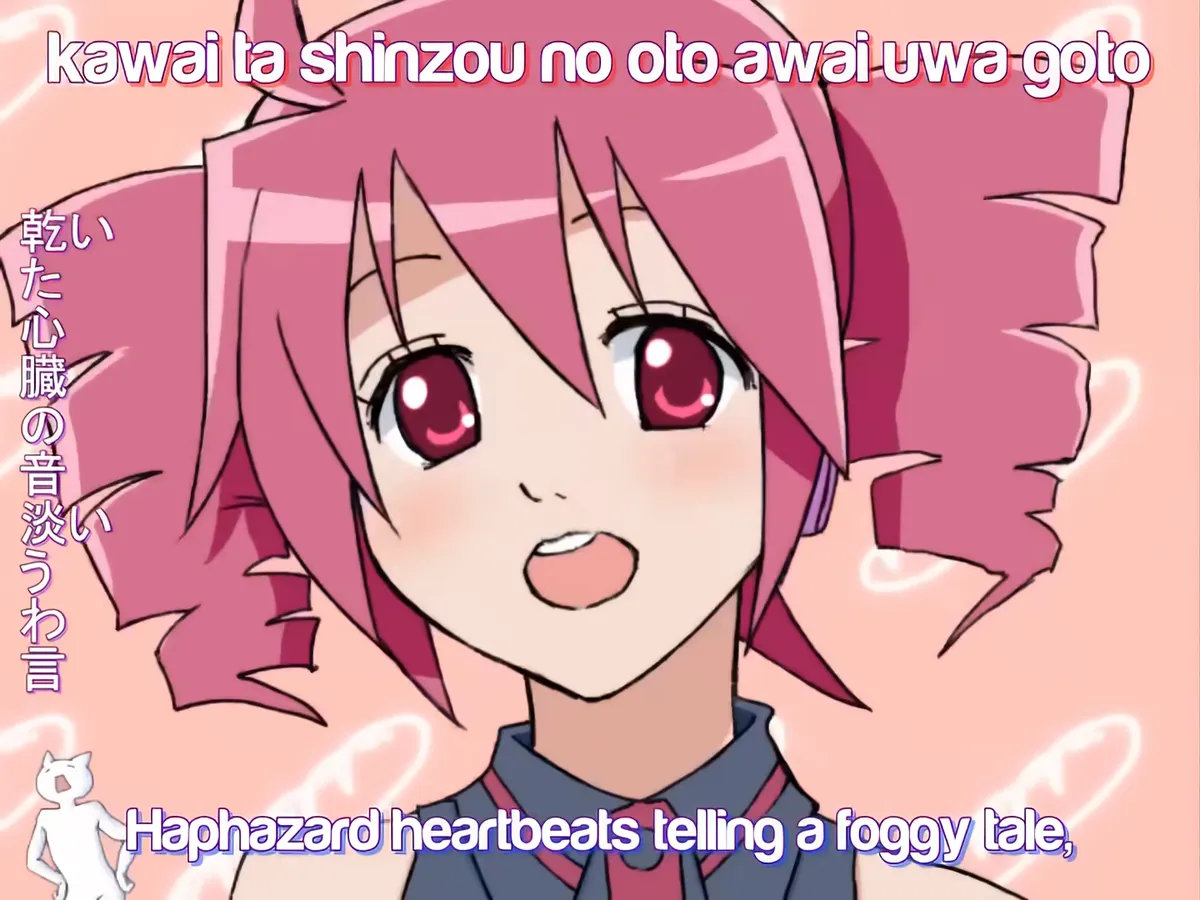
I was never super into Vocaloid, but I was in the trenches in the 2000s, so naturally I'm familiar with the hits. Back then, the internet seemed like a magical and mysterious place. Early memes would float over, fully formed, from the Japanese video sharing website NicoNico Douga (essentially, Japanese YouTube). I'm not sure if this stereotype still exists since Asian culture has become so mainstream in the Anglosphere now, but back then the joke was that Japanese memes were generally inscrutable and weird, but that when it came to cute things, they were far ahead of the rest of the world. Perhaps today, that is still the case.
Kasane Teto emerged from the Vocaloid scene, and is now remembered as one of the two or three most popular characters, as far as I can tell. Not Miku, but not completely unknown either. Teto originally emerged as a hoax, a sort of Miku ripoff that gained popularity and eventually became a star in her own right, which I think is a perfect encapsulation of a lot of the Vocaloid scene in general.
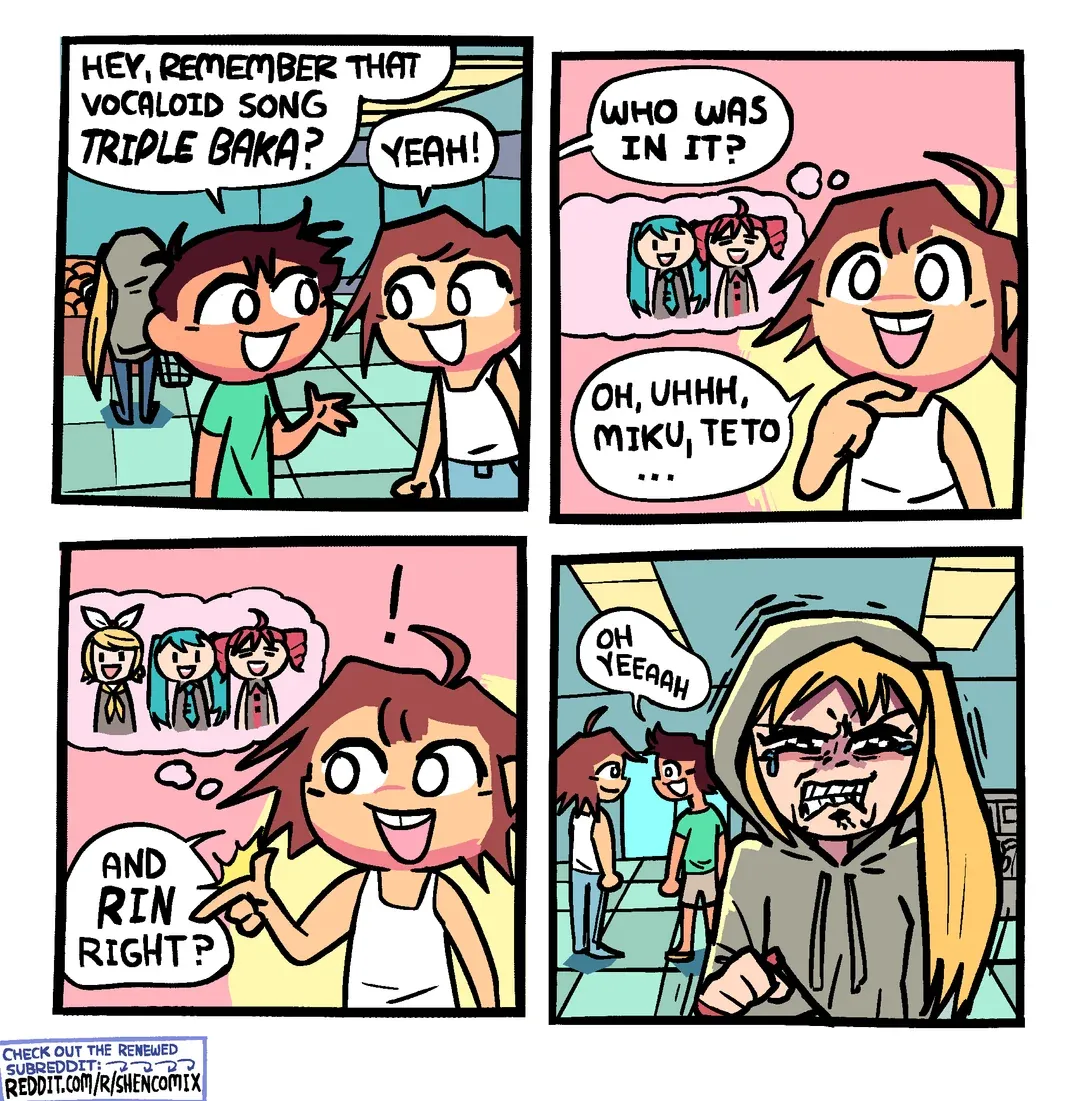
She had a couple of hits, and perhaps Fukkireta is no longer her most popular song, but it is still probably the most iconic to me. This video is in many ways a perfect encapsulation of a very specific era in Internet culture. Let me count the ways.
Anatomy of a NND Meme
Isn't it funny how KnowYourMeme has become the most trusted resource in Internet anthropology? This stuff moves so fast and is so quickly forgotten that it seems like almost no one takes the time to document Internet culture. Archaeologists struggle piecing together prehistory because no one was writing anything down, sure, but now we have the opposite problem. There is too much being written down, and very little physical evidence being left behind, so memes can wash away without anyone noticing. That's why, despite historically being irritated by the hagiography of early Western anime fandom amongst that generation (talking in hushed tones about Toonami and trading the damn VHS tapes... okay, boomer), in my old age I've come around to really appreciating the archival work they do. I love the YouTube channel Funyarinpa Foundation, for example, which documents early Pokemon fandom in a thorough and respectful way. But anyway, my point with this is that I'll direct you to the KnowYourMeme page for Fukkireta for a basic overview.
The first thing that makes this such a prototypical NND meme is that there's a cute and iconic dance that goes along with the meme -- in fact, there's two! There's the original cat man in the corner wagging his hips, and the adorable head-bob. As the KYM page explains, whenever such a meme popped off you would see a deluge of utattemita ("I sang") / odottemita ("I danced") remixes, which encouraged covers to popular memes and songs. This practice continues to this day, and now it seems not so different from a TikTok dance. But just because TikTok caught up doesn't mean it wasn't novel at the time; it seems to me that NicoNicoDouga was actually ahead of the curve in the way users would remix their favorite videos. Another particular feature of these animated memes is the excitement of drawing over the characters to spread the image across fandoms. Another example would be the ED to the anime Kekkai Sensen, which was so popular that fans traced over the animation and replaced it with characters from other series like Naruto or Pokemon. These animations to me seem rather high effort for something that is purely derivative, but it's fun. This looseness allowed memes to spread quickly.
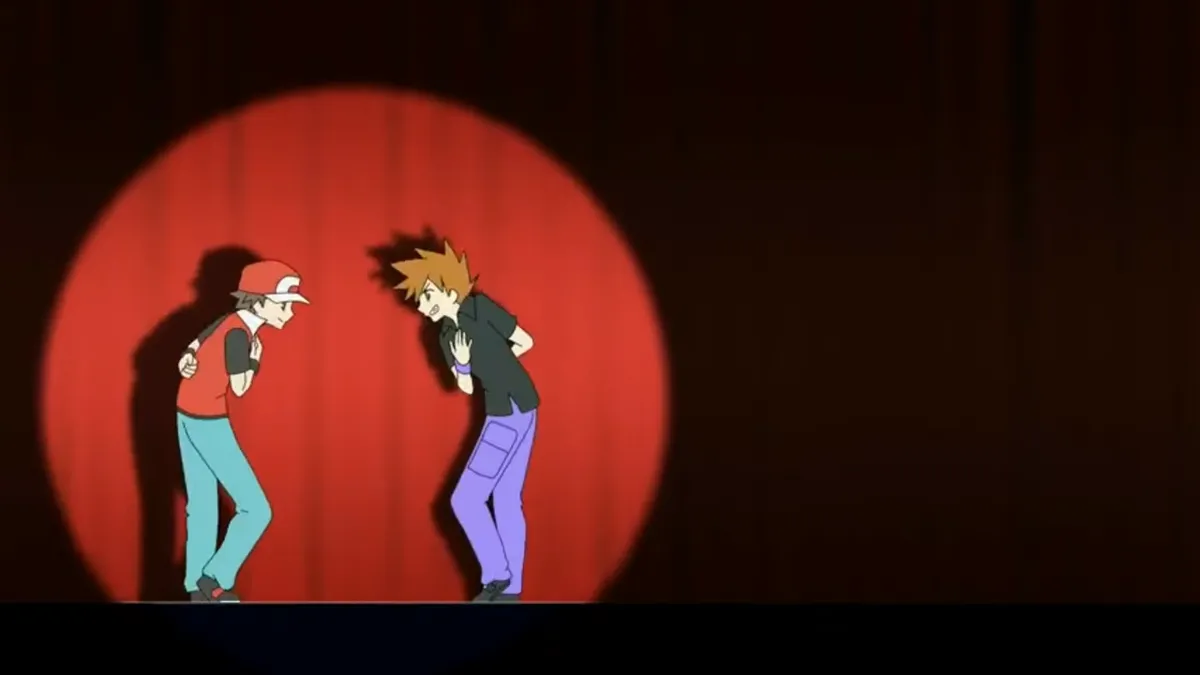
This cover in particular is sung by Ron, a popular singer at the time known for their utattemita videos. They specialize in Kagamine Rin and Ren songs (hence the name), and this gives Teto a sort of tomboyish charm in the video that pairs well with her intended mischievous nature.
So all the ingredients are here: an immensely catchy Vocaloid song, a cute anime girl on the come up, a dance that's easy to emulate or draw a character performing, and a great performance. The last ingredient that made this meme possible is the mysterious tripflag, who took the pain of subtitling it, and putting it on YouTube for English-speaking fans to enjoy in June 2010.
The Translation
I couldn't find much information on tripflag, but I could gather a few details from a quick search. They seem to be into software and travelling to Japan (so, like any weeb), and clearly attained an impressive level of fluency way back in 2010 when this was much harder to do. Their name is a reference to the term tripf-g, which means a 4chan user who identifies themselves with a display name (on 4chan, anonymity is the default; if you identify yourself, you must be someone who cares so much about seeking attention that you're willing to endure the ridicule that comes along with it. But it was precisely this vanity that made tripf-gs the users who often had the most at stake and contributed the most to projects). Anyway, I like that the description says:
With FABULOUS KARAOKE and translation that makes sense (though not necessarily correct). Aegisub segfaulted so the kanji karaoke borked, but it's not like anyone cares rite
So tripflag already understands the important thing about translation: it should make sense, even if it's not necessarily correct. This especially goes for songs in the denpa genre, which often play with absurd, free associating lyrics with modulating rhythms to sketch a portrait of a lonely pop culture-obsessed figure poisoned by the Internet and their own delusions (this is a contentious topic, you can come at me for my description of what denpa means, I don't care). They're kind of like the 20th century Japanese successors to Rimbaud. There you go, an analogy no one else would ever be stupid enough to make.
Let's get into some specific lines I enjoy:
Dorayaki wa shushoku ni narenai // Grilled food is only good for one day
A more literal translation would be "dorayaki won't do as a staple food". Dorayaki is a confection made of red bean paste and pancakes, and it's delicious, but it is sweets. I think the translation is pretty good: just like sweets, grilled food is an indulgence, not something you can have every day. This line is a comment on staying grounded and not letting fantasies take over our lives. But, remember, denpas are also students of pop culture, so I imagine a Japanese audience would also hear dorayaki and immediately think of the fact that it's Doraemon's favorite food (kinda like a Scooby Snack). So I think there's a double meaning here more specific to the NEET otaku lifestyle -- the fantasies of anime, or escapist fiction specifically, is the danger to be avoided. I think it's funny how close this is to the Bible verse I alluded to in the title, but I think it's a good translation that was chosen.
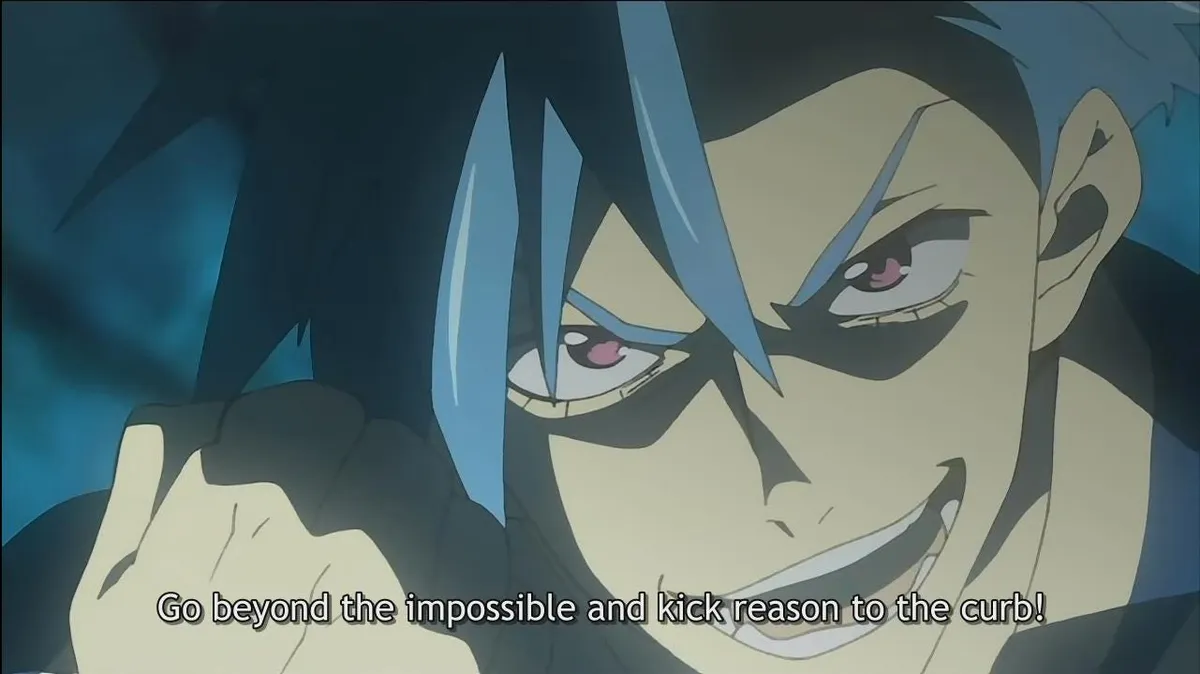
Naraba uwagaki shichaeba boku no omoidoori // Kick reason to the curb and just follow me
The very next line follows up on that thought with the connective phrase naraba ("if that is the case", or perhaps, "that being said"). The literal translation is something like: "if that is so, overwrite it; my way". This is really hard to translate literally because with Japanese the subject is always implied, which is why my literal translation sounds like caveman language. The way I read this line is actually something like: "that's what they say, anyway; ignore that, let's do it my way". It's a self-aware and humorous conclusion to the previous statement: fantasies are illusory, but if I just fantasize hard enough I can push past that (the name of the video, "fukkireta", could be translated as "I have broken through").
What's cute about this is "kick reason to the curb" is a quote by Kamina from Tengen Toppa Gurren Lagann, which was of course massively popular at the time. Due to the language barrier and fungibility of translations, there's not a lot of anime characters who are quotable, but Kamina is one of them. Any self-respecting weeb at the time would clock this reference. I think this is brilliant as a reference: TTGL is all about "doing the impossible", and in that show the characters bend reality through sheer force of will and imagination, just like the narrator of the song. By using an anime reference that only English-speaking otaku would know, it both hints at the tacit Doraemon reference in the previous line that is lost in translation, as well as induces a complicity in the basement-dwelling 4chan weeb listener just as denpa would to a NEET in Japan. This line is really what made me want to write this whole thing. It's just a perfect encapsulation of what it felt like to be in early anime fandom. I'm not necessarily glorifying it. As I alluded to before, there was a lot of casual homophobia, and none of these people were particularly well-adjusted or fun to hang around. But there was something cozy about the shared delusion of many corners of the early internet; everyone was alone, but they were alone together.
Skipping ahead a bit:
Kimi wa koko ni iru no? Birthday mada saki desho? // Are you still here? The birthday's soon after all
Another classic example of why songs are so difficult to translate from Japanese to English. The subject is totally unclear: who's talking, what are we talking about? A literal translation: "are you here? birthday is still ahead, right?" I would interpret this as a bit of rambling by our narrator, asking if the listener is still paying attention. The allusion to a birthday (presumably the singer's) is a childish non sequitur, in my opinion.
Iikagen ni koyubi kara Mienai ito shuchou shinai // Quit with this nonsense already, There's no such thing as being bound by fate
I just thought this was an elegant solution, but I'm sure others have noted before. Literal translation: "stop focusing on this unseen thread that is tied to the pinky". If you've seen Your Name or any Japanese media, you probably know this is a reference to the red string of fate. I just think "bound by fate", suggesting the same imagery of coils or strings, is so fortuitous. Did the idea come from The Fates, originally? Is it just a coincidence that our idioms are so similar? Japanese is quite a different language from English, and generally idioms don't match directly unless they were borrowed at some point. I think in this case the idea of fate being governed by a network of strings, perhaps like a spiderweb, or the work of some master seamstress, is just such an evocative correspondence as to have been independently conceived by at least two cultures in different places and times.
Kawaita shinzou no oto awai uwagoto // Haphazard heartbeats telling a foggy tale
I don't know what this guy was on but this is some great song translation! I mean, even without knowing any Japanese, it's just a nice turn of phrase. Literally: "the sound of a dry heart; faint delirium", which is poetic in its own right. The idea here is perhaps to suggest crying oneself to sleep and muttering nonsense (the theme of escapist fantasy is already present; at the end of the song, the singer begs not to wake up, so the connection to dreams is there, too). But of course, a "dry heart" is not a metaphor that makes any sense in English (though maybe it didn't in Japanese). The idea to instead make the heart irregular instead of dry is I think an inspired choice, and "foggy" connecting to "faint" with the fog erasing the outlines of objects in sight is really good.
Soredemo shinjite shiawase ni naru youni reigitadashiku // Believe that good things will come to those who wait
This is another use of an English idiom to make things more natural. The literal translation: "Anyway, believe it will be happy; politely." I think the "politely" (which comes into play in the next line) is saying something about conforming to society, which would be the exact opposite of being a lonely NEET. We all know that having proper manners and bowing and using respectful language and all that is more important in Japan than it is over here.
Mazu wa sasaina aisatsu toko kara Are you ready? So let's start this off right. Are you ready?
Literally: "first, a little greeting: are you ready?" I think the greeting (aisatsu) is playing off the politeness motif in the previous line. The idea is that if you want to reintegrate into society, start with the little things: a proper greeting, perhaps. But this also works as just an amazing prechorus. A greeting, much like a chorus, can be a ritual response. When the teacher walks in, everyone stands up, you know what to do. And in the context of Fukkireta, when Teto says "Are you ready?" get ready to go apeshit.
The song ends with:
Yume kara pipipi samenaide samenaide // I can hear the alarm blasting through my dream
"From the dream -- beep, beep, beep -- don't wake up, don't wake up". I do like how the onomatopoeia "pipipi" adds such a satisfying texture to that hit in the melody in the original, though.
Nukumori nigenaide mada asa ha, tappuri aru kara ato 5 fun, iya 10 pun matasete / Please just let me sleep, I don't want to leave this warmth. There's plenty of time, just 5, no 10 more minutes will do.
No notes here. About as perfect a translation as you can get.
I really like Fukkireta. It's one of my favorite songs of that era and I'm glad the YouTube video still exists. Even now, the quality of the video looks really good -- it's in HD, because weebs were always ahead of the curve on video quality (the title even brags about the encoding protocol, HD 256k. At the time HD was catching on, but I don't think it was quite the standard, yet). The drawings and colors look really crisp to me, I'm mesmerized by Teto every time. It's one of those videos you could watch for 10 hours, and I'm sure 10 hour edits exist.
And I think this is one of those cases where knowing the meaning of the lyrics really enriches one's appreciation of the song. The meandering, playful tone of this self-aware ode to escapism with just a hint of haughty defeat, the obstinate desire to cling to childhood and to never wake up. It seems that everything about this song was made for nostalgia, and even at the time I was already nostalgic for it. And in a broader sense, it's become for me an artifact of the early Internet and its optimism, an Internet that already knew it would be destroyed, a petulant, joyful child who's more lucid than they're willing to admit.